12 new species named May 30: a Nagaland cascade frog and 11 Australian slugs in a landmark family revision
The Saturday window (May 29–30, 2026) yielded 12 taxa from two papers: Amolops kamal, a new cascade frog from Kiphire district, Nagaland — the 21st Amolops recorded from India — described by six ZSI scientists using integrative morphology and 16S phylogenetics; and 11 new Cystopelta slugs and subspecies from a landmark revision by Hyman & Köhler (Zoological Journal of the Linnean Society, 2026) that nearly triples the genus's known diversity, formally expands Cystopeltidae to include nine additional Australian snail genera, and removes four genera to Charopidae. All 12 taxa are Not Evaluated by IUCN. Both original papers are paywalled; morphological detail is acknowledged as incomplete.

Saturday publishing windows in taxonomy are quiet by design — major journals rarely schedule their release calendars around weekends. The 24 hours from May 29 (22:00 UTC) through May 30, 2026 delivered exactly 12 new taxa from two papers: one cascade frog from India's northeastern frontier, and 11 Cystopelta slugs from southeastern Australia. Both original papers are behind paywalls; all 12 taxa carry IUCN status "Not Evaluated."
Twelve is a fraction of a typical weekday haul, but the Cystopelta revision alone restructures an entire family — nearly tripling the genus's known species count and formally relocating nine snail genera into it while expelling four others.
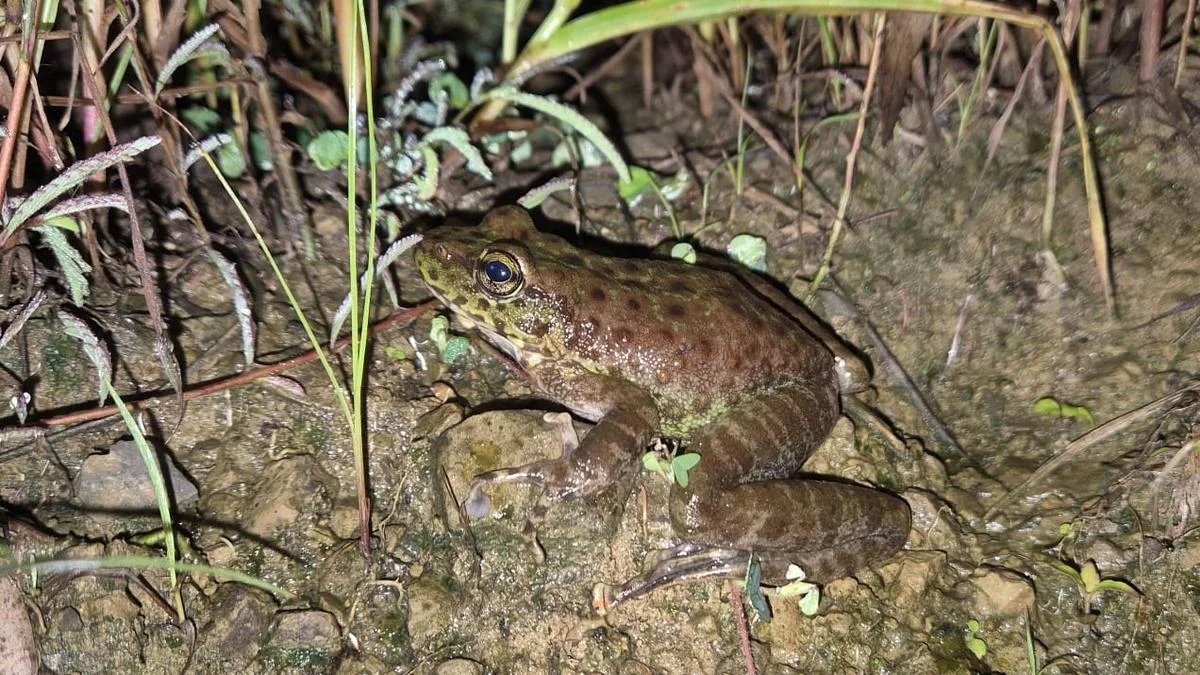
Amolops kamal — a new cascade frog from Nagaland, Northeast India
Taxonomy: Animalia → Chordata → Amphibia → Anura → Ranidae → Amolops
Bhaskar Saikia (Zoological Survey of India, Shillong), Bikramjit Sinha (ZSI Kolkata), A. Shabnam, Prabir Narayan Konwar, Mridul Kumar Borthakur, and K.P. Dinesh (ZSI Pune) describe Amolops kamal Saikia et al., 2026 from Records of the Zoological Survey of India, Volume 126, Issue 2, pages 131–140. 1
Type locality: Near Singrep village, Kiphire district, Nagaland, Northeast India — a district that borders Myanmar.
Discovery: The specimen was collected during a field expedition led by Bikramjit Sinha in August 2024. The habitat is a fast-flowing hill stream (cascade), consistent with the ecological preferences of the Amolops genus worldwide.
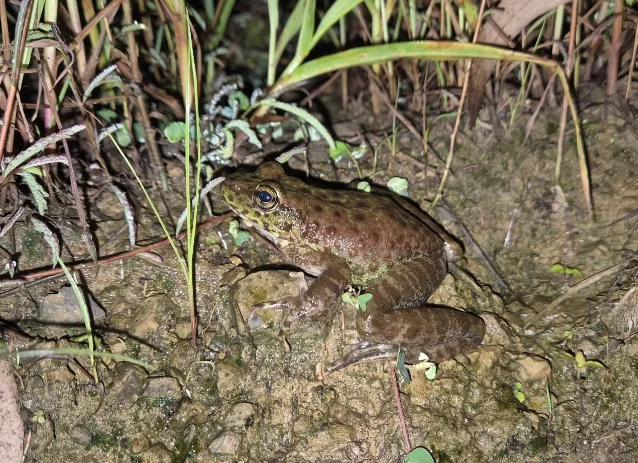
Morphology and identification: Full morphological measurements — snout-vent length, detailed coloration, and diagnostic features — are documented in the original paper, which was inaccessible due to Cloudflare protection on the journal's website at the time of this window. Identification used integrative taxonomy combining morphological analysis with molecular phylogenetics (16S mitochondrial DNA), the latter led by K.P. Dinesh at ZSI Pune. 1
Species complex: Amolops kamal belongs to the Amolops indoburmanensis species complex within the Amolops marmoratus group. The paper demonstrates that A. indoburmanensis — previously treated as a single, widespread species across northeastern India and Myanmar — likely represents multiple distinct evolutionary lineages. Amolops kamal is one such lineage, confirmed as genetically and morphologically distinguishable. 3
Genus context: Amolops Cope, 1865 currently holds 90 recognized species globally (93 per the Amphibian Species of the World database), distributed across South and Southeast Asia. This is the 21st Amolops recorded from India, where the genus divides across three species groups: A. marmoratus, A. monticola, and A. viridimaculatus. 3
Etymology: The epithet kamal honors the late Dr. Kamal Choudhury, who was a teacher and mentor to lead author Bhaskar Saikia at B. Borooah College, Guwahati, Assam. 2
Common name: Nagaland Cascade Frog.
Conservation status: Not Evaluated (IUCN). The species has a restricted known range in a biodiversity hotspot subject to land-use pressure, but no formal assessment has been conducted.
Cystopelta — 11 new taxa in a family-level revision, southeastern Australia
Taxonomy: Animalia → Mollusca → Gastropoda → Stylommatophora → Punctoidea → Cystopeltidae → Cystopelta
Isabel Hyman (Australian Museum Research Institute, Sydney; School of Science, Western Sydney University, Penrith) and Frank Köhler (Australian Museum Research Institute) published "Cystopeltidae redefined: integrative taxonomy of the Australian endemic slug Cystopelta with the description of 11 new species and subspecies (Punctoidea: Stylommatophora)" in the Zoological Journal of the Linnean Society, Volume 207, Issue 1, article zlag067 (27 pages; DOI: 10.1093/zoolinnean/zlag067; online May 27, 2026). Frank Köhler registered all 11 taxa in WoRMS/MolluscaBase on May 29, 2026. 4
What the paper does
Cystopeltidae before this paper held only five species — all in Cystopelta, the sole slug genus in the family — plus a handful of South American snail species whose placement was supported by molecular data. The revision:
- Expands Cystopelta from 5 to 13 species (5 existing + 8 newly described), plus 3 new subspecies
- Formally assigns nine Australian snail genera to Cystopeltidae — Ngairea, Hedleyoconcha, Setomedea, Lenwebbia, Mussonula, Excellaoma, Annoselix, Pasmaditta, and Planilaoma — based on shared anatomy (a reduced secondary ureter) and molecular phylogenetic support
- Removes four genera (Scelidoropa, Diemenoropa, Lilloiconcha, Zilchogyra) to Charopidae, where molecular evidence indicates they belong
- Re-describes five existing species: C. petterdi, C. astra, C. bicolor, C. purpurea, and C. septentrionalis
The paper's abstract describes the pre-revision family as comprising "the Australian endemic slug genus Cystopelta, a group with just five species, and several snail species from Australia and South America recently placed in this group on the strength of molecular phylogenetics." 4 The result of the revision is a family that has grown from a single-genus slug family into a multi-genus assemblage spanning both slugs and snails across eastern and southern Australia.
Methods combined comparative morpho-anatomy with mitochondrial markers (COI, 16S) and nuclear markers (ELAVI8, ITS2). The study was funded by the Australian Government through the Australian Biological Resources Study (grant 4-H03Z61B). 4
The 11 new taxa
Morphological diagnoses, precise type localities (GPS coordinates and elevation), and etymology for each name are in the full paper, which is behind the Oxford Academic paywall. State-level distributions are from WoRMS. 5 Name glosses below are inferred from standard Latin/Greek or known geographic referents.
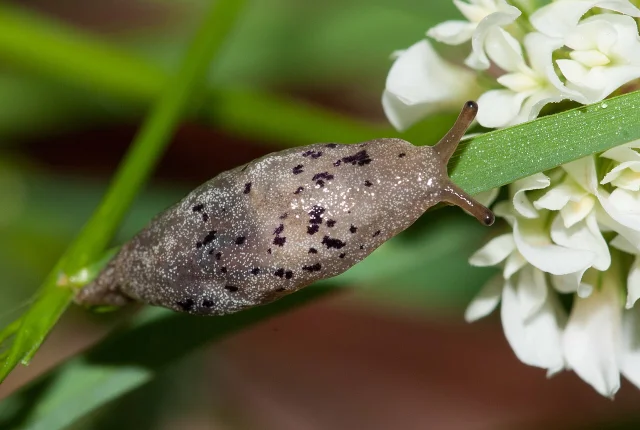
Eight new species (all authority: Hyman, 2026):
| Species | State | Name gloss |
|---|---|---|
| C. barringtonia | New South Wales | Barrington Tops, NSW — the likely collection area |
| C. bassiana | Bass Strait (King Island) | Bass Strait — the body of water separating Tasmania from the mainland |
| C. jimhymani | New South Wales | Named for Jim Hyman — likely a family member of the lead author |
| C. nunniong | Victoria | Nunniong Plateau, eastern Victoria |
| C. pauperocochlea | New South Wales | Latin: pauper (sparse/small) + cochlea (shell) — suggesting a reduced shell |
| C. rafflesorum | New South Wales | Named for Raffles (referent to be confirmed from full text) |
| C. riparia | Victoria | Latin: riparia (of riverbanks) — suggesting a riparian habitat |
| C. tallaganda | New South Wales | Tallaganda National Park/State Forest, southern NSW |
Three new subspecies (all authority: Hyman, 2026):
| Taxon | State | Notes |
|---|---|---|
| C. astra flava | Tasmania | New subspecies of C. astra Iredale, 1937 (the "Snowy Mountains Humpback Snail"); flava = Latin for yellow, suggesting a yellowish color form |
| C. bassiana bassiana | King Island, Bass Strait | Nominate subspecies of C. bassiana — automatically named |
| C. bassiana cinerea | Victoria (mainland) | cinerea = Latin for ash-grey; geographically separated from the nominate subspecies on King Island |
All 11 taxa are recorded in WoRMS as isTerrestrial = 1, isMarine = 0, isExtinct = 0, authority "Hyman, 2026," status "accepted." 5
Conservation status: Not Evaluated (IUCN; all 11 taxa). The paper may include preliminary range and population assessments in the full text, which was inaccessible due to paywall restrictions.
Cover image: Amolops kamal photographed in Kiphire district, Nagaland, by the ZSI field team. Credit: Special Arrangement / The Hindu.
参考来源
- 1Saikia et al. 2026 — Records of the Zoological Survey of India 126(2):131–140
- 2Highland Post — New frog species discovered in Nagaland by ZSI Shillong team
- 3The Hindu — Nagaland yields a new-to-science cascade frog species
- 4Hyman & Köhler 2026 — Zoological Journal of the Linnean Society 207(1):zlag067
- 5WoRMS — Hyman & Köhler 2026 source record (SourceID 563334)
围绕这条内容继续补充观点或上下文。